A clutter-free kitchen isn’t about constant cleaning, it’s about designing a space that naturally stays organized. When layout, storage, and daily habits work together, your kitchen starts maintaining itself.
Here’s how to design a kitchen that feels calm, functional, and effortlessly tidy, every single day.
1. Start with a Functional Layout (Flow First, Not Just Looks)
Before cabinets and colors, focus on movement.
A cluttered kitchen often starts with a poor layout. When things aren’t placed logically, items pile up in the wrong zones.
Design tips:
- Follow the work triangle (sink, stove, refrigerator)
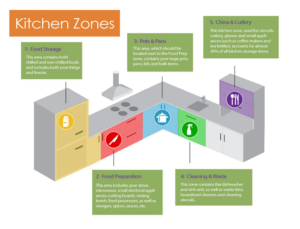
- Create clear zones:
- Prep zone (near sink)
- Cooking zone (near hob)
- Storage zone (near fridge/pantry)
- Keep daily-use items within arm’s reach
Result: Less walking, less dumping things randomly.
2. Design Storage That Works For You (Not Against You)
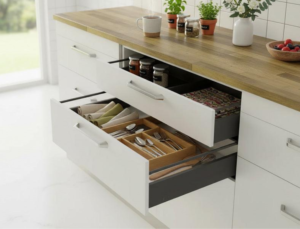
Storage isn’t about “more cabinets”, it’s about smarter access.
Must-have clutter-free solutions:
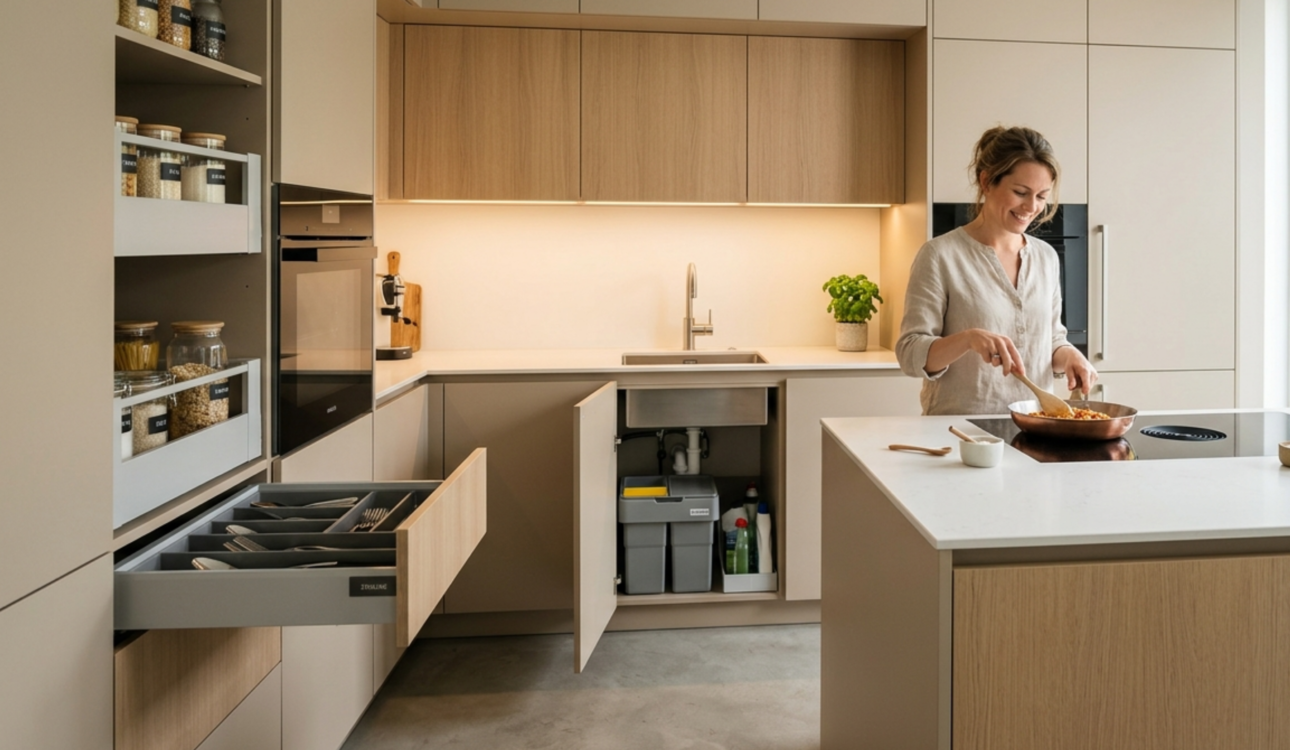
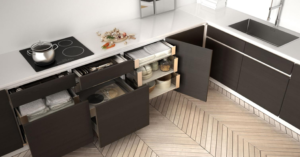
- Deep drawers instead of shelves (easy visibility)
- Pull-out pantry units for vertical storage
- Corner carousel or magic corner units
- Drawer organizers for cutlery and tools
- Built-in bins (hidden waste systems)
Golden rule:
If you can’t see it, you won’t use it—and it becomes clutter.
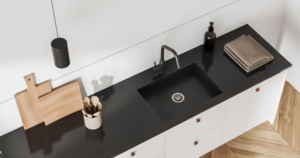
3. Keep Countertops Almost Empty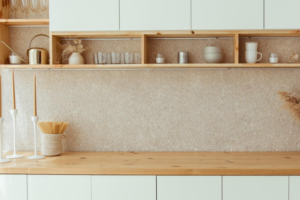
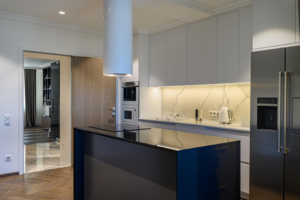
Your countertop sets the tone of your kitchen. The more items you leave out, the faster clutter builds.
What to do:
- Keep only 2–3 essential items outside (e.g., coffee machine, fruit bowl)
- Use appliance garages to hide small appliances
- Install wall cabinets or lift-ups for quick access storage
Visual trick:
A clear counter instantly makes your kitchen look bigger and calmer.
4. Create a “Drop Zone” to Control Daily Mess
Clutter doesn’t come from cooking, it comes from daily life. Keys, bags, groceries, random packets… they all land in the kitchen.
Solution:
Design a small drop zone:
- A drawer near the entrance
- A small tray or sectioned organizer
- A dedicated shelf for incoming items
This prevents random clutter from spreading across your kitchen.
5. Plan Hidden Storage for “Ugly Essentials
Not everything is aesthetic and that’s okay. Cleaning supplies, bins, extra stock… these need a hidden home.
Smart ideas:
- Under-sink pull-outs for cleaning products
- Tall units for bulk storage
- Integrated waste segregation systems
- Closed cabinets for rarely used items
Out of sight = out of mental clutter.
6. Follow the “One-Touch Rule”
Design alone won’t fix clutter, habits complete the system.
The one-touch rule means:
Don’t put it down—put it back.
Make this easier by design:
- Keep storage close to usage zones
- Avoid overstuffed cabinets
- Label or define sections clearly
When everything has a place, putting things back becomes effortless.
7. Light It Right,Because Darkness Creates Mess.
A poorly lit kitchen hides clutter.
Use layered lighting:
- Task lighting under cabinets
- Ambient ceiling lighting
- Highlight lighting for key areas
Good lighting = better visibility = better organization.
8. Choose Materials That Feel Calm (and Forgiving)
Your material palette impacts how “busy” your kitchen feels.
Go for:
- Matte finishes (less fingerprints)
- Neutral tones (beige, grey, soft wood)
- Handleless or minimal hardware
These reduce visual noise, even if the kitchen is in use.
9. Design for Your Lifestyle, Not Trends
A clutter-free kitchen isn’t one-size-fits-all.
- If you cook daily → prioritize easy-access storage
- If you entertain often → plan open + serving zones
- If space is small → go vertical and multi-functional
The best kitchen is the one that fits your routine.
Final Thought
A clutter-free kitchen is not about perfection, it’s about intentional design.
When layout flows, storage supports, and habits align…
your kitchen stops feeling like wor and starts feeling like ease.